The report states that Baghdad transferred 41 trillion Iraqi dinars to the Kurdistan Region between 2014 and 2025, an amount sufficient to cover approximately 46 months of public-sector salaries.
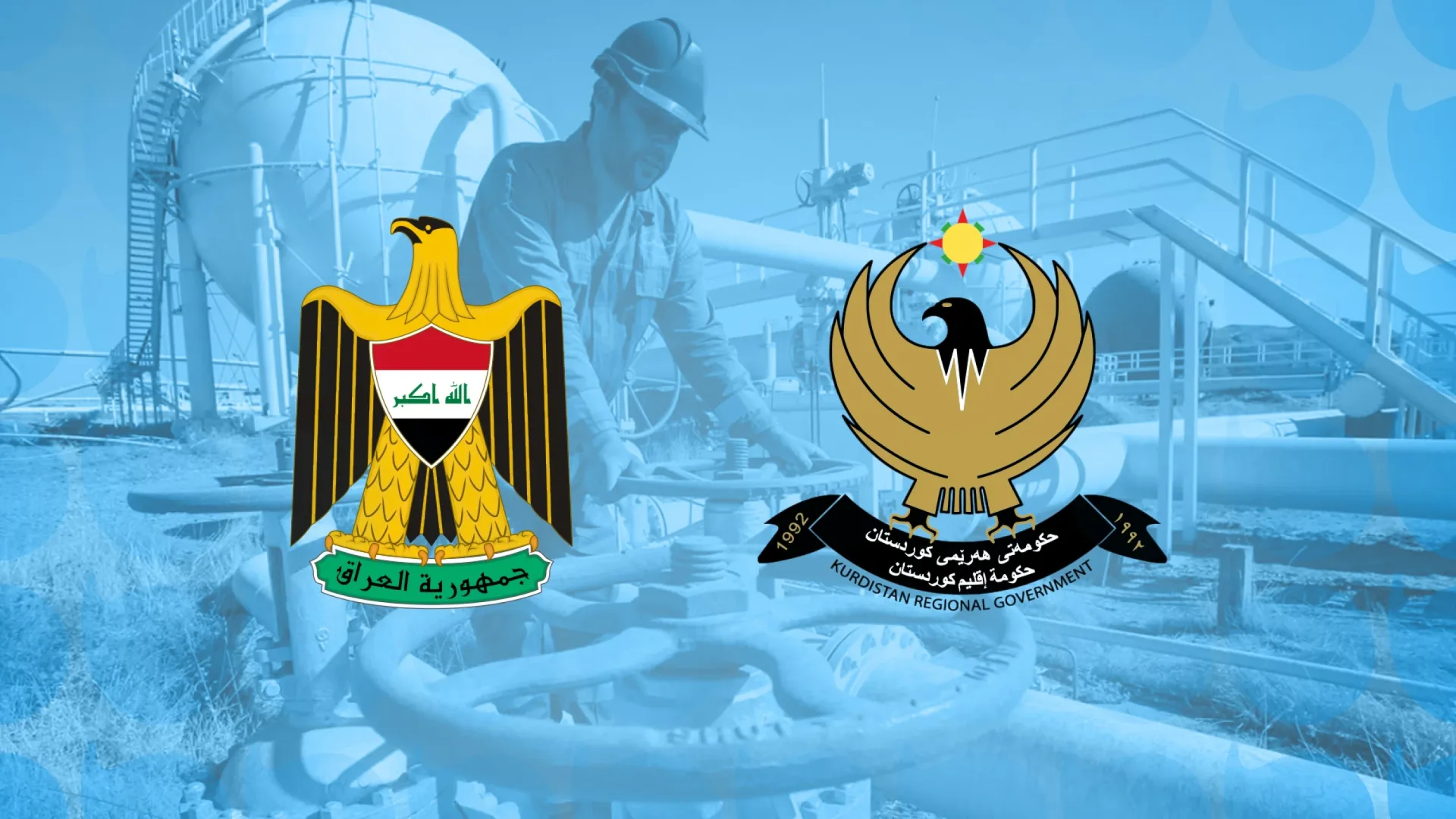
A report published on November 7, 2026, by the Kurdistan Regional Government’s (KRG) Department of Media and Information, in coordination with the Ministry of Economy and Finance, examines the Kurdistan Region’s share of Iraq’s federal finances from 2014 through 2025. The report argues that deductions for sovereign expenditures and the federal government’s failure to transfer the Region’s budgeted share were the primary causes of its financial crisis.
According to the report, Iraq’s total general budget over the 12-year period amounted to approximately 1.767 quadrillion Iraqi dinars. The Kurdistan Region’s share before deductions exceeded 245 trillion dinars, while its stated net entitlement after deductions was 146 trillion dinars.
In practice, however, the report says Baghdad transferred only 41 trillion dinars to the Region, representing approximately 2.32% of the total budget.
The report states that the Region’s official budget share was 17% from 2014 to 2017 and was reduced to 12.67% beginning in 2018. It argues that this reduction lacked a legal basis.
Impact on Public-Sector Salaries
The report estimates that the 41 trillion dinars transferred over the 12-year period equaled funding for approximately 46 months of public-sector salaries out of a possible 144 months.
This does not mean salaries went unpaid during the remaining 98 months. Rather, according to the report, federal transfers did not cover those expenses. The KRG states that it relied on direct oil exports to help meet its financial obligations.
Annual Transfers (2014-2025)
| Year | Iraq Budget or Expenditure | Region’s Stated Net Share | Amount Transferred | Salary Coverage Stated in Report |
|---|---|---|---|---|
| 2014 | 174.6 trillion dinars | 20 trillion | 2.28 trillion | 3 months |
| 2015 | 119.5 trillion dinars | 14.8 trillion | 2.47 trillion | 3 months |
| 2016 | Not specified | 13.1 trillion | 0 | 0 months |
| 2017 | Not specified | 11.6 trillion | 0 | 0 months |
| 2018 | 104.1 trillion dinars | 6.8 trillion | 2.85 trillion | 3 months |
| 2019 | 133.1 trillion dinars | 9.9 trillion | 5.31 trillion | 6 months |
| 2020 | 148 trillion dinars spent | 18.7 trillion | 2.18 trillion | 3 months |
| 2021 | 129.9 trillion dinars | 11.4 trillion | 1.2 trillion | 1 month |
| 2022 | 122 trillion dinars spent | 15.4 trillion | 400 billion | 1 month |
| 2023 | 198.9 trillion dinars | 16.5 trillion | 4.69 trillion | 5 months |
| 2024 | 211.8 trillion dinars | 20.9 trillion | 10 trillion | 10 months |
| 2025 | 211.8 trillion dinars | 20.9 trillion | 9.59 trillion | 11 months |
The figures and salary-coverage estimates above are those presented in the report.
Dispute Over Sovereign Expenditures
The report states that the number of items classified as sovereign expenditures increased from 10 to 100 beginning in 2015.
According to its estimates, more than 65 trillion dinars were deducted from the Kurdistan Region’s share for such expenditures over the 12-year period. This amount exceeds the 41 trillion dinars that Baghdad transferred to the Region during the same timeframe.
The report contends that the Kurdistan Region, including its Peshmerga forces, received no corresponding allocation or benefit from these expenditures.
For the 2023-2025 budget period, the report estimates sovereign expenditures at 142.3 trillion dinars, accounting for approximately 23% of the combined budget. Under Baghdad’s methodology, the Region is assigned 12.67% of these expenditures, equivalent to roughly 18.1 trillion dinars.
The report proposes an alternative calculation based on the Region’s stated prededuction share of 78.8 trillion dinars, resulting in a contribution of approximately 10 trillion dinars. Using this method, it estimates a difference of about 8.2 trillion dinars over the three-year period.
Census and the Proposed 2027 Share
Citing Iraq’s 2024 general census, the report states that the Kurdistan Region accounts for 14.14% of the country’s population.
It argues that the proposed 12.70% share in the draft 2027 federal budget does not reflect that demographic reality.
Conclusion
The report concludes that the Kurdistan Region’s financial shortfall stems primarily from the way its federal budget entitlement is calculated and distributed, rather than from any failure by the Region to comply with federal budget requirements.
Editorial Note
The source text claims that 41 trillion dinars equals 2.04% of 1.767 quadrillion dinars. This appears to be a mathematical error, as the actual proportion is approximately 2.32%.
The report also does not fully explain the deductions that reduced the Region’s share from more than 245 trillion dinars before deductions to a stated net entitlement of 146 trillion dinars.